

7 Climbing Pinch Block Drills for Cold Weather Training
Last Updated: November 23, 2026
Quick Summary
Climbing pinch blocks in cold weather need a longer warm-up and a lighter starting load, because cold fingers lose sensation and friction. Warm up with easy movement and unloaded hangs, then treat your first two working sets as calibration rather than maximum efforts.
- Warm up with five minutes of easy movement, twenty unloaded reps and easy jug hangs before loading.
- A narrow pinch of roughly 40-60 mm biases the thumb and index finger; a wider 80-100 mm pinch is harder.
- Add load in small steps of 1-2 kg per hand per week and progress only one variable at a time.
- Two sessions per week is a sensible starting point, with at least 48 hours between hard pinch sessions.
- Wood feels comfortable in the cold, while plastic and metal feel colder and slicker, so warm them first.
Table of Contents
- Why Cold Weather Changes Your Pinch Block Session
- Finger Warm-Up for Climbing Before You Load the Block
- A Cold-Weather Pinch Block Workout Routine
- How Often to Train Pinch Strength in Winter
- Frequently Asked Questions
Why Cold Weather Changes Your Pinch Block Session
Cold air makes a pinch block session harder before you load a plate: fingers lose sensation, chalk feels slick, and a stiff thumb cannot clamp as it does in summer. That is why climbing pinch blocks in cold weather need a longer warm-up and a lighter starting load.
The block does not care about temperature, your preparation does. If you own a pinch block, train smarter this season. If you are still deciding, our practical review of whether a pinch block is worth it for climbing covers cost and who benefits most.
Finger Warm-Up for Climbing Before You Load the Block
A cold-start warm-up is the most important part of a winter session. Easy movement raises finger temperature and prepares the flexors and forearms before loading them.
Start with these drills, in order:
- Five minutes of easy bouldering or a light row, until hands feel warm
- Twenty slow open-and-close reps, no load
- Three sets of ten-second easy hangs on a large jug
- Light thumb presses against the block, no added weight
- Two easy bodyweight hangs before any weighted work
Beginners should follow a structured start before adding load, see our guide to finger strength training for beginners.
A Cold-Weather Pinch Block Workout Routine
The routine is simple, warm up, pick a width, add small load, hold with intent, but cold changes how each step is executed. Cold fingers lose friction and sensation, so the block feels slicker and a given load feels heavier. Treat the first two working sets as calibration, not maximum efforts.
Choosing block width and grip position
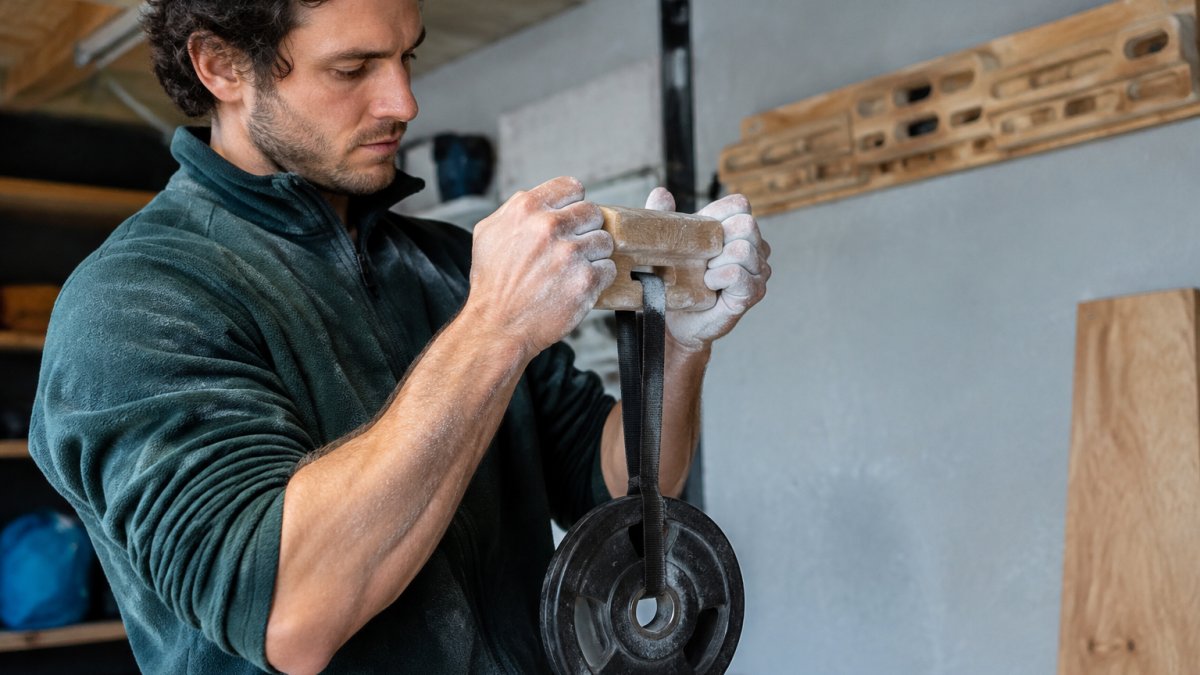
Pinch width determines which muscles work. A narrow pinch (roughly 40-60 mm) biases the thumb and index finger and feels closer to a small edge; a wider pinch (80-100 mm) recruits more of the thumb pad and whole hand and is harder at the same load. A useful approach is to use a width you can hold for a clean seven-second effort at moderate load, rotating widths across the winter. Keep the thumb roughly perpendicular to the block face, press the pad rather than the tip, and let the fingers wrap just enough to stop rotation. If the block tilts or the thumb slides, the width or load is wrong for that session.
The session
| Drill | Hold Time | Sets | Rest | Focus |
|---|---|---|---|---|
| Two-hand pinch, light load | 10 seconds | 3 | 2 min | Warm-up and calibration |
| One-hand pinch, moderate load | 7 seconds | 3 each hand | 2 min | Max strength |
| Repeaters, 7:3 rhythm | 7 on, 3 off | 6 reps | 3 min | Grip endurance |
| Thumb-only press | 5 seconds | 3 each hand | 1 min | Thumb engagement |
| Block pull, heavy | 5 seconds | 3 | 3 min | Load progression |
Rest
Train one hand at a time to spot a weak side, and keep the block portable so you can train indoors where it is warmer. Between sets, keep hands warm, a glove, pocket or hand warmer preserves the sensation and friction built in the warm-up.
Block material and cold-weather handling
Material changes grip feel in the cold. Wood is generally comfortable to hold in cool conditions. Plastic and metal can feel colder and slicker to the hand, so if you own them, warm them in your hands before the first set and keep them out of a cold garage between sessions.
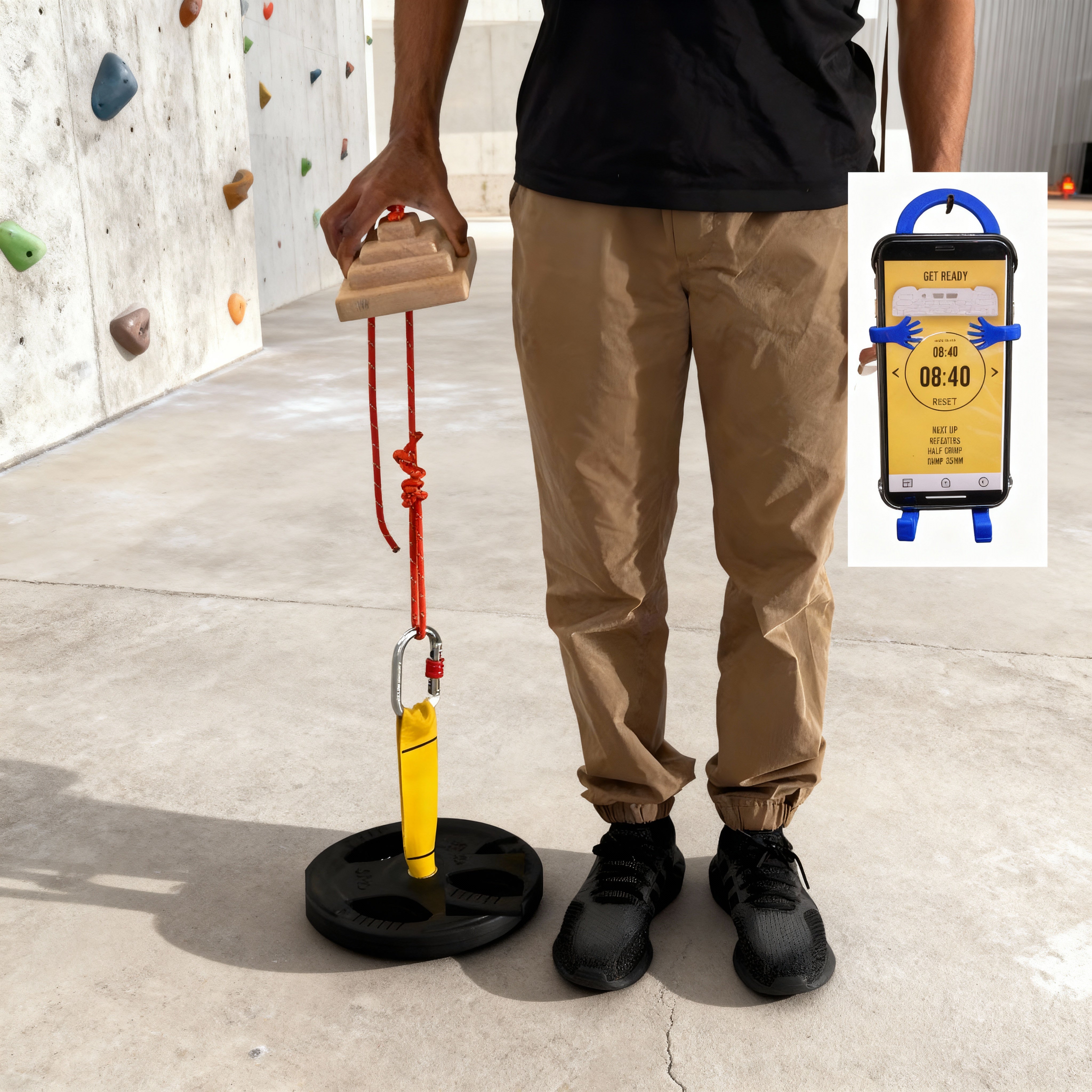
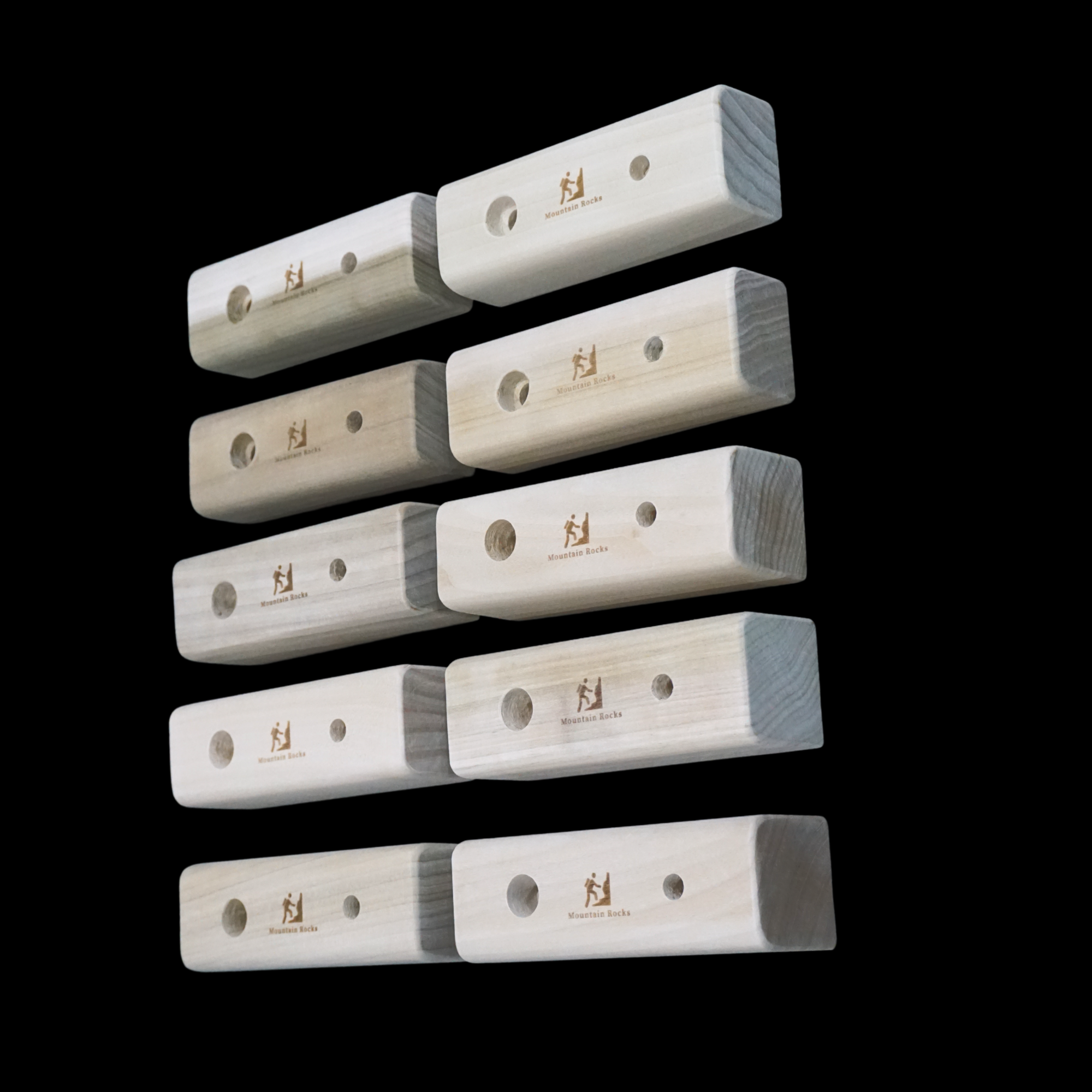
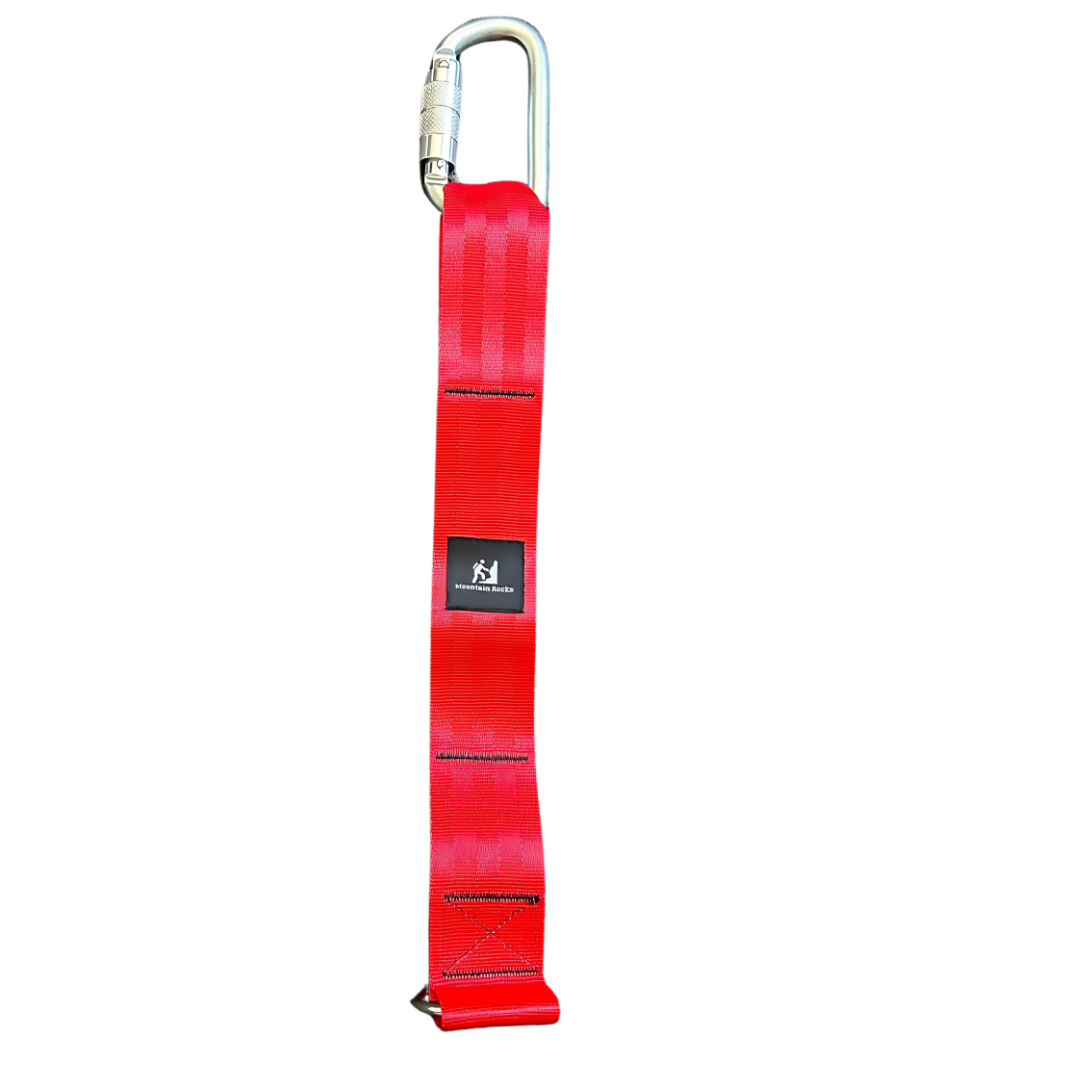
A dual-sided wooden block with a strap loading pin lets you move between edge depths and pinch widths without extra gear. The pinch block with loading pin covers both finger edges and pinch grips, so one tool handles the whole session. If you just need more weight, a strap loading pin is the add-on; for variety, a set of wooden pinch holds lets you rotate grip sizes through the winter.
Progressive overload in the cold
Add load in small steps, 1-2 kg per hand per week is sustainable early in a winter block, less once loads get heavy. Progress one variable at a time: load, hold time or width, never all three in the same week. If grip position slips before the hold time is up, stop the set; a slipping thumb is the clearest early signal the load is too high for that day.
How Often to Train Pinch Strength in Winter
Two sessions per week is a sensible starting point for many climbers. Pinch strength is a maximum-strength quality, and the thumb and finger flexors need recovery between hard sessions. Three sessions works only if you alternate heavy and light days, and only after a few weeks of consistent two-session weeks.
A week-by-week winter progression
A common pattern is to run the winter block in four-week waves:
- Weeks 1-2 (introduction): two sessions per week, moderate loads, focus on grip position and warm-up quality. No added weight beyond what allows a clean seven-second hold.
- Weeks 3-4 (build): two sessions per week, add small load each week, keep hold times the same. One session can shift to repeaters for endurance.
- Week 5 (deload): one light session at roughly half the working load, or skip the block and climb easy. Deloads are not optional in winter, cold hands accumulate fatigue quietly.
- Weeks 6-9 (second build): repeat with slightly higher starting loads, rotating pinch width once across the block.
Rest days matter more than session count. Leave at least 48 hours between hard pinch sessions, and do not stack one the day before or after hard fingerboard or limit bouldering. Winter strength is maintained by consistency, not volume.
Adapting to experience level
Beginners and returning climbers may find it sensible to start with two-hand pinches only, no added weight, and short holds, adding load only when a set feels controlled start to finish. Intermediate climbers can move to one-hand pinches and repeaters within the first block.
Watch out: cold hands tempt you to train harder to "feel" the work, which is how tweaks happen. Add weight in small steps and stop a set when grip position slips. Persistent finger pain, numbness that does not resolve within minutes of warming, or an unstable-feeling thumb are stop signals, end the session and reassess.
Measuring progress consistently
Track four things every session: load, hold time, block width and which hand. Record perceived effort so you can tell a genuine strength gain from a colder-than-usual garage day. Only compare numbers from the same width and setup, a seven-second hold on a narrow block is not comparable to one on a wide block. That is the whole game with climbing pinch blocks: small, repeatable progress beats one heroic session.
Winter training asks for patience: shorter sets, longer warm-ups, and honest records of what you can actually hold. MOUNTAIN ROCKS builds purpose-made training gear for exactly this, including wooden pinch blocks with a strap loading pin and steel carabiner, dual-sided grip widths, and a mobile holder for timing sets. Our kit is designed to be portable, so you can train indoors when the cold bites.
Frequently Asked Questions
How do you warm up your fingers before pinch block training in the cold?
Start with five to ten minutes of whole-body movement, then work through easy open-hand hangs and light pinches before adding weight. Cold fingers lose elasticity, so build up gradually: use a lighter load than your normal working set for the first two sets, and keep a jumper on until your hands feel warm.
Are climbing pinch blocks better than hangboards for pinch strength?
They train different things. A hangboard develops finger flexor strength and hanging endurance on edges and pockets, but it does not load the thumb. Climbing pinch blocks add thumb engagement and a full pinch grip, which carries over to slopers, pinches on boulders and sport routes. Many climbers use both: hangboard work for edge strength, pinch block work for thumb-inclusive grip. A combined bundle covers both without buying twice.
How often should climbers train pinch strength with a block?
Two sessions a week is a sensible starting point, spaced at least 48 hours apart to let the finger flexors and forearm muscles recover. Keep each session to three to five sets per hand with holds of seven to ten seconds. In cold weather, drop to one or two hard sets and treat the rest as warm-up. Track added weight and hold duration so you can see progress and avoid pushing load too fast.
